Relocating to Queen Creek before your neighborhood is finished: What to expect
Request a Moving
Quote Today
"*" indicates required fields


Queen Creek is growing quickly, so moving into a new neighborhood may mean living near construction, changing roads, evolving HOA rules, and unfinished amenities. Planning around those changes can make the first months easier and help you understand what is temporary versus permanent.
Moving into a growing community can feel very different from choosing an established neighborhood. That is especially true when relocating to Queen Creek. The town’s population grew from 59,519 in 2020 to about 89,770 in 2025, a 51.4% increase. That rapid growth helps explain the new homes, roads, schools, and commercial projects appearing across the area. If you are planning a move to Queen Creek, your house may be finished while nearby streets remain under construction. Many residents also coordinate moving services in Arizona around closing dates and changing access. For anyone moving your family to Queen Creek, knowing what may still change can make the transition easier.
What is it like relocating to Queen Creek while your neighborhood is still under construction?
A finished home does not always mean a finished street. Nearby lots may still have framing crews, concrete trucks, roofers, landscapers, and utility workers. Some days may feel quiet. Other days may start earlier than expected. Local Queen Creek movers may also encounter changing street access as nearby lots reach different construction stages. These conditions matter when planning a move to Queen Creek, especially during an active building phase.
Construction hours also change with the season:
- From May 1 through October 15, weekday work can begin at 5 a.m.
- During that period, work generally ends by 7 p.m.
- Saturday work cannot start before 7 a.m.
- From October 16 through April 30, weekday work starts after 6 a.m.
- During the cooler season, Saturday work ends by 5 p.m.
- Sundays and legal holidays have additional restrictions.
What else should you expect? Dirt lots, unfinished landscaping, temporary fencing, and building materials can remain nearby. Streetlights and sidewalks may also appear in stages. This is normal in a growing subdivision, but it can affect daily routines for a while.
Will road construction affect my commute?
It can. Queen Creek is still adding transportation capacity as the southeast Valley grows. One of the biggest examples is State Route 24.
The first SR 24 segment opened in 2014 between Loop 202 and Ellsworth Road. Another segment reached Ironwood Drive in 2023 under an interim configuration. More work is planned across about 5.64 miles. That project includes 2 additional general-purpose lanes between Ellsworth Road and Ironwood Drive.
There is more. New bridges are planned over Williams Field Road, Signal Butte Road, and Meridian Road. The bridge over Mountain Road is also expected to widen. Changes near Loop 202 are part of the project as well. These conditions can also shape arrival routes for residential movers serving homes in newer developments. Road access is especially worth considering when planning a move to Queen Creek from another part of the Valley.
What does that mean for a new resident? Your fastest route today may not stay the fastest route during construction. Commutes toward Mesa, Chandler, and other East Valley job centers can also change as projects move forward.
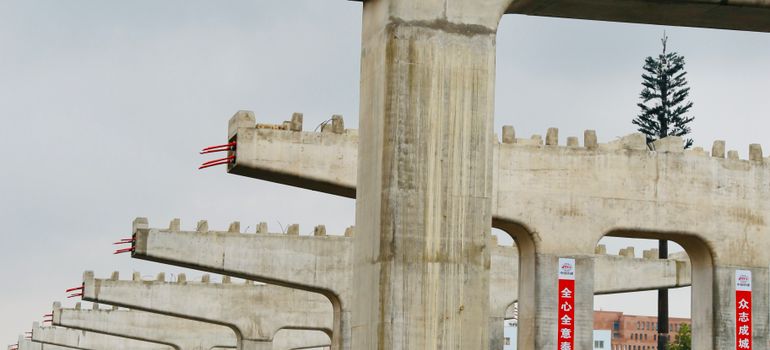
Road construction can affect daily routes when relocating to Queen Creek during continued growth.
How do utilities work when moving into a new Queen Creek home?
This part can surprise people. A Queen Creek mailing address does not always mean the property sits inside Queen Creek town limits.
Some homes in ZIP codes such as 85212 and 85143 may use a Queen Creek mailing address while sitting outside the incorporated town. That difference can affect water, trash, and other municipal services. This distinction can be particularly important when moving your family to Queen Creek, since service providers may differ between nearby addresses.
For qualifying Queen Creek water customers, the current setup looks like this:
- New service requires a $150 initial payment.
- That includes a $125 refundable security deposit.
- It also includes a $25 establishment fee.
- The deposit can return after 12 consecutive on-time payments.
- Residential trash service currently costs $16.22 per month.
- That includes weekly trash and recycling.
- It also includes scheduled monthly bulk collection.
Queen Creek contracts with Waste Connections of Arizona for applicable residential trash service. Electricity may come from Salt River Project, while Southwest Gas serves applicable gas customers.
So, can 2 nearby homes have different providers? Absolutely. That is why the exact address matters when planning a move to Queen Creek.
Can school boundaries change as Queen Creek neighborhoods grow?
School assignments can be more complicated than they first appear. The closest school is not always the assigned school. That makes attendance boundaries particularly relevant when moving your family to Queen Creek.
Queen Creek Unified School District uses attendance boundaries for individual campuses. Families can apply for open enrollment outside their assigned area, but acceptance depends on space and program capacity. Open-enrollment students also generally do not receive district transportation.
Transportation rules matter too. For the 2026–2027 school year, new in-district bus riders needed registration by June 12, 2026 to guarantee service on the first school day. Registrations submitted later could take 24 to 48 hours after school started.
QCUSD also uses the My Ride K-12 app for bus tracking. The district provides free all-day kindergarten at its elementary schools.
Could school assignments shift as growth continues? They can. Rapidly growing neighborhoods create changing enrollment patterns, so school boundaries remain an important part of planning a move.

School boundaries deserve attention when relocating to Queen Creek with school-age children.
What happens when neighborhood amenities are not finished yet?
Sometimes the home is ready before the pool, playground, trail, or common area. That can feel disappointing, especially if those features influenced the purchase. Families moving your family to Queen Creek may notice these delays more when recreation spaces matter daily.
However, Queen Creek already has several large public recreation options. Frontier Family Park opened in June 2024 at 20039 South 220th Street. The 85-acre park includes:
- 3 lighted multipurpose fields
- 6 lighted baseball and softball fields
- 24 lighted pickleball courts
- 2 basketball courts
- 2 sand volleyball courts
- 1 inclusive playground
- 10 standard picnic ramadas
- 2 large-group ramadas
- A 5-acre fishing lake
Desert Mountain Park adds another 29 acres at 22201 South Hawes Road. Households waiting for closets, cabinets, or other interior work may also use climate-controlled storage to keep belongings away from heat and dust.
So, are unfinished private amenities a dealbreaker? Not necessarily. Still, it helps to know which features already exist and which remain part of a future phase.
What happens to the HOA?
New communities often begin with more developer involvement in the homeowners association. That can affect budgets, rules, maintenance, and decision-making. HOA documents also deserve attention when planning a move to Queen Creek into a newer subdivision.
Arizona law now places clearer limits on developer control in planned communities. The governing declaration must identify when developer control ends, or explain how that date is calculated. Developer control also cannot continue beyond the sale of the second-to-last lot.
The law was approved on April 9, 2024. After developer control ends, the association may still need to maintain common areas at previous service levels while the developer owns remaining lots.
Why does this matter? HOA costs can change as more amenities become active. Pools, landscaping, gates, parks, and private streets all require ongoing funding. CC&Rs also shape what homeowners can do with their properties.
In short, the HOA may look different at full buildout than it does during the early construction years.
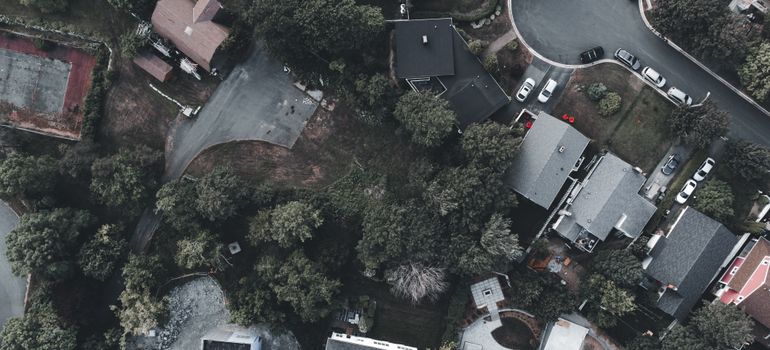
HOA responsibilities can change as a new residential community approaches full buildout.
How can I find out what will be built around my Queen Creek neighborhood?
That empty land behind your house may stay empty for years. Or it may become homes, shops, roads, or public facilities. Future land use can matter greatly when moving your family to Queen Creek and choosing a long-term home.
Queen Creek uses its General Plan to guide future development. Different sections cover growth areas, transportation, housing, employment, and commercial development. Zoning rules then apply to individual parcels and specific projects.
Current planning cases can include rezonings, site plans, and ordinance changes. That matters because a parcel can move from a broad future-use category toward a much more specific development proposal.
Future roads also matter. A quiet edge of a subdivision today may later sit near a wider road or new intersection.
The main takeaway is simple: vacant does not always mean permanent open space. In a fast-growing area like Queen Creek, nearby land can change significantly over time.
How should I plan moving day in an unfinished Queen Creek community?
Moving day can be straightforward when relocating to Queen Creek, but timing matters more in an active construction area. That becomes even more important when planning a move to Queen Creek around a new-home closing date.
Queen Creek uses several inspection stages before a new home receives final approval. Those inspections cover structural work, electrical systems, plumbing, HVAC, and other safety requirements. Job sites also need visible addresses and approved plans during inspections.
Inspection hours change during the year. From September through May, inspections generally run from 6 a.m. to 1:30 p.m., Monday through Thursday. Friday inspections run from 6 a.m. to 10 a.m. During June through August, inspections can begin at 5:30 a.m.
Why does that matter after closing? Construction traffic can also begin very early. Moving trucks may share narrow streets with contractor vehicles, delivery trucks, and crews. For households with limited time between closing and move-in, packing and unpacking services can also reduce the amount of work happening inside the home. That can be especially useful when moving your family to Queen Creek on a tight schedule.
A little planning helps. Early morning access, temporary parking limits, unfinished curbs, and active lots can all affect where movers can safely stop.
What should you remember before moving into an unfinished neighborhood?
Queen Creek is growing quickly, and that growth affects everyday life. New homes may sit beside active construction. Roads can change. HOA responsibilities may shift. Nearby land may also develop later. Still, most of these changes are easier to manage when you know what to expect. The biggest point is understanding what already exists and what is still planned. That makes relocating to Queen Creek much easier to approach. For anyone moving your family to Queen Creek, knowing how the neighborhood may change can also make daily planning simpler. You are not only moving into a house. You are also moving into a community that may continue changing around you for several years. If move timing, access, or neighborhood construction creates questions, contact us before the moving date.
FAQ
Everything you need to know before hiring Arizona movers, from costs and scheduling to services and move-day expectations.
Is Queen Creek considered part of Phoenix?
No. Queen Creek is its own incorporated town southeast of Phoenix. However, it remains part of the broader Phoenix metropolitan area.
Does a Queen Creek mailing address always mean you live in Queen Creek?
No. Some properties use a Queen Creek mailing address while sitting outside incorporated town limits. ZIP codes such as 85212 and 85143 can include addresses that are not inside the municipality.
What internet providers serve Queen Creek?
Cox Communications and CenturyLink are among the providers listed by the Town. Availability can still vary by exact address, especially in newer developments.
Can a new Queen Creek home be located on a county island?
Yes. Some properties may sit outside Town boundaries. Queen Creek also warns about “wildcat splits,” where roads, sewer connections, and utilities may not be provided by the Town.
Are more parks planned as Queen Creek keeps growing?
Yes. Town planning documents include future park land and trail projects. Longer-term plans also include Southeast Park construction and additional trail connections.
Does Queen Creek offer water-conservation programs for homeowners?
Yes. The Town provides water-use calculators, leak checks, workshops, landscaping guidance, and other conservation resources. Residential incentive programs are also being developed.